

Antigua is a good base for birding. Fifteen minutes on foot from the centre, a wooded hill looks down on the town. Within an hour by road there are fincas crossed by forest trails, highland villages, and the pine-oak forests where the Pink-headed Warbler lives. Here are the places we go, what they cost to enter, and how to reach them, with us or on your own.
Prices noted in October 2026. Dollar amounts are rounded, at about Q7.6 to the dollar.
Cerro de la Cruz: fifteen minutes on foot
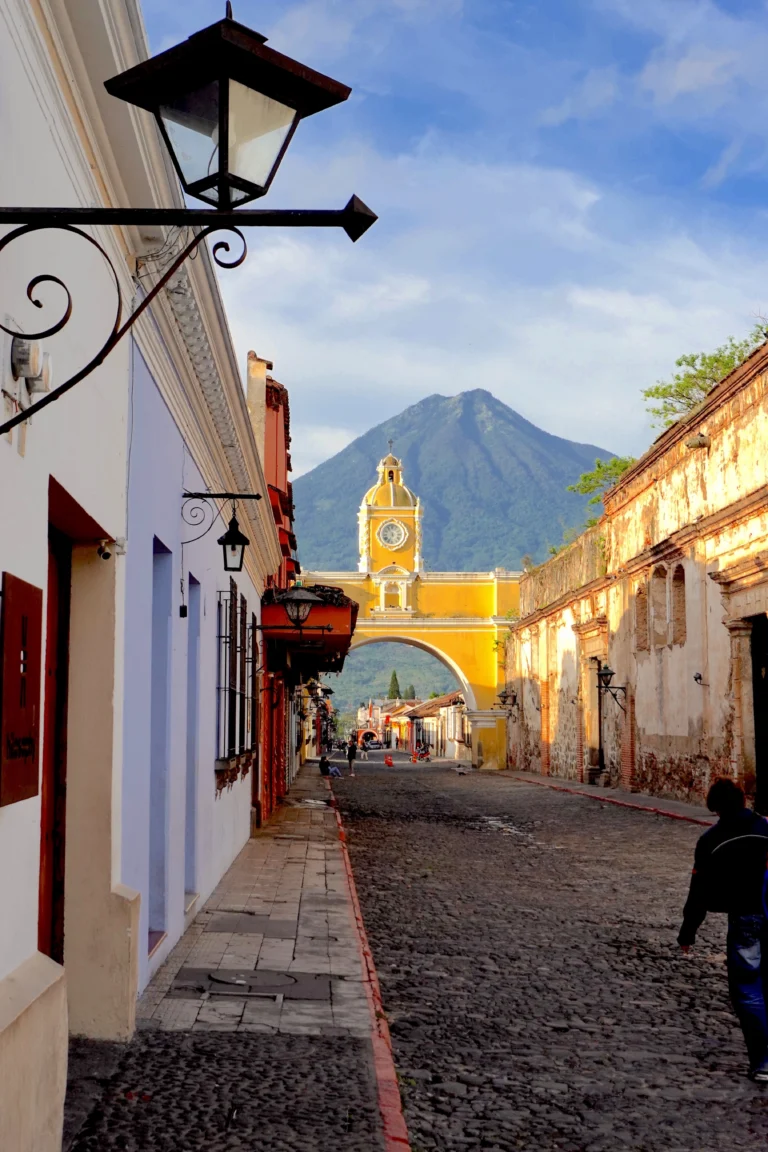
The closest of all. From the centre of Antigua, the path up to the cross takes about fifteen minutes on foot, and from the top you look down on the rooftops with the Volcán de Agua behind them. It is one of the most visited viewpoints around Antigua, so come early. In the first hours of the morning the trees on the slope hold Azure-crowned Hummingbirds, Bushy-crested Jays, Rufous-browed Wrens and Blue-and-white Mockingbirds. From October, migrants from the north join them, such as the Baltimore Oriole and the Rose-breasted Grosbeak.
Getting there: on foot, and entry is free. Our Cerro de la Cruz outing starts at 7:00 or 14:00.
Finca El Pilar: the hummingbirds
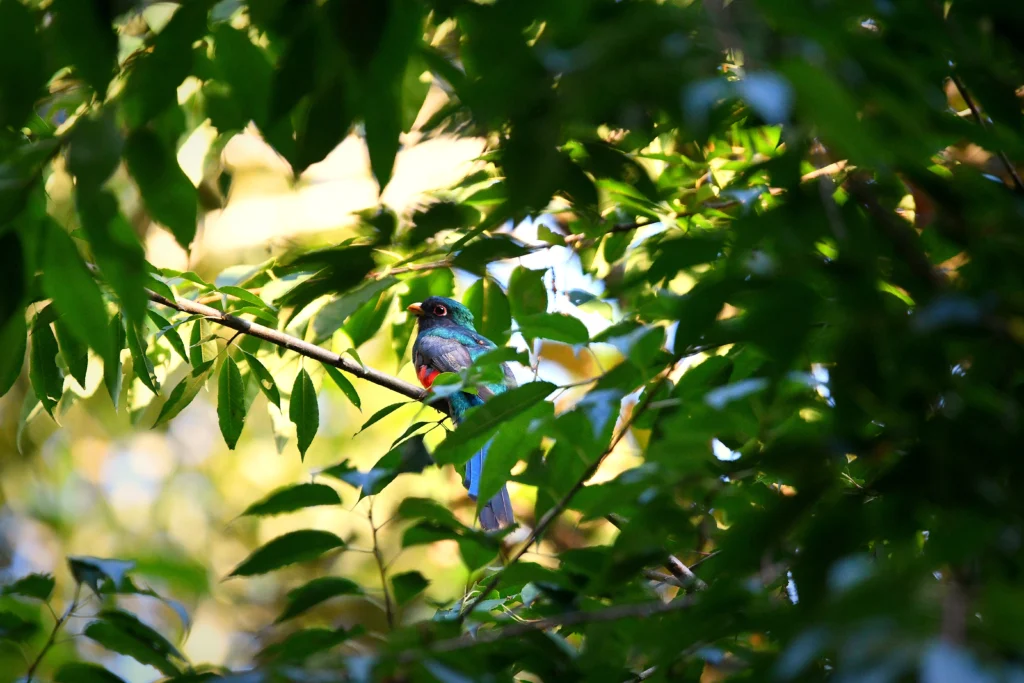
Fifteen minutes by road from Antigua. Access to the trails costs Q65 per person (about $8.50). Close to the trail, feeders draw several species of hummingbird at once: Violet and Rufous Sabrewings, White-eared and Azure-crowned Hummingbirds, often a few metres away. You see many species well without searching far, which makes El Pilar a good first morning in Guatemala. Further along the trail, look for the Collared Trogon and the Northern Emerald-Toucanet.
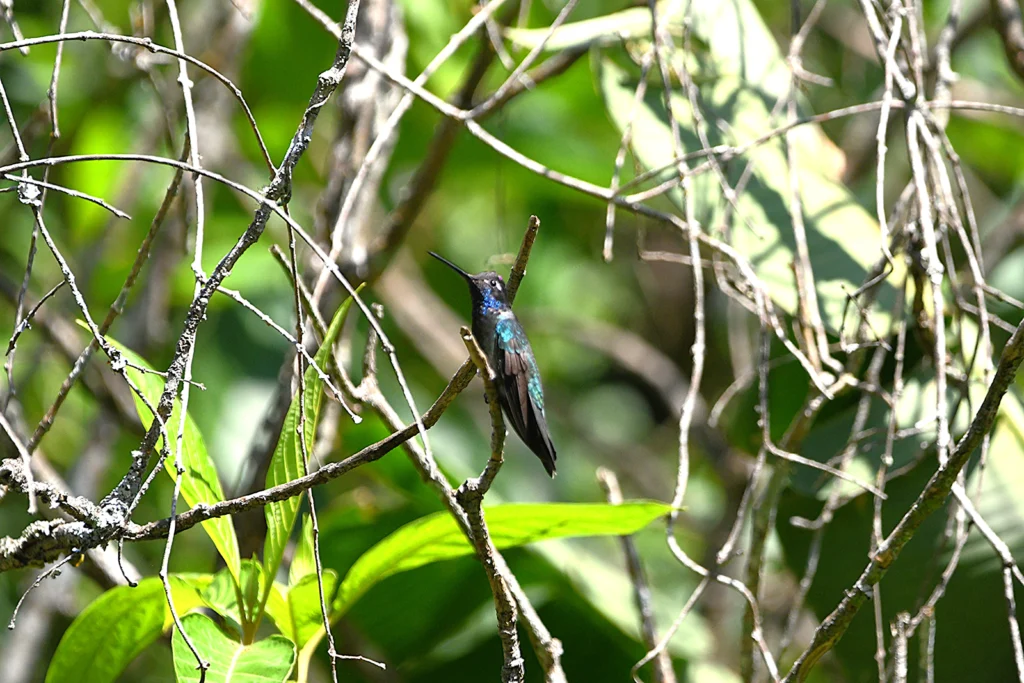
Our Finca El Pilar outing includes the trail fee.
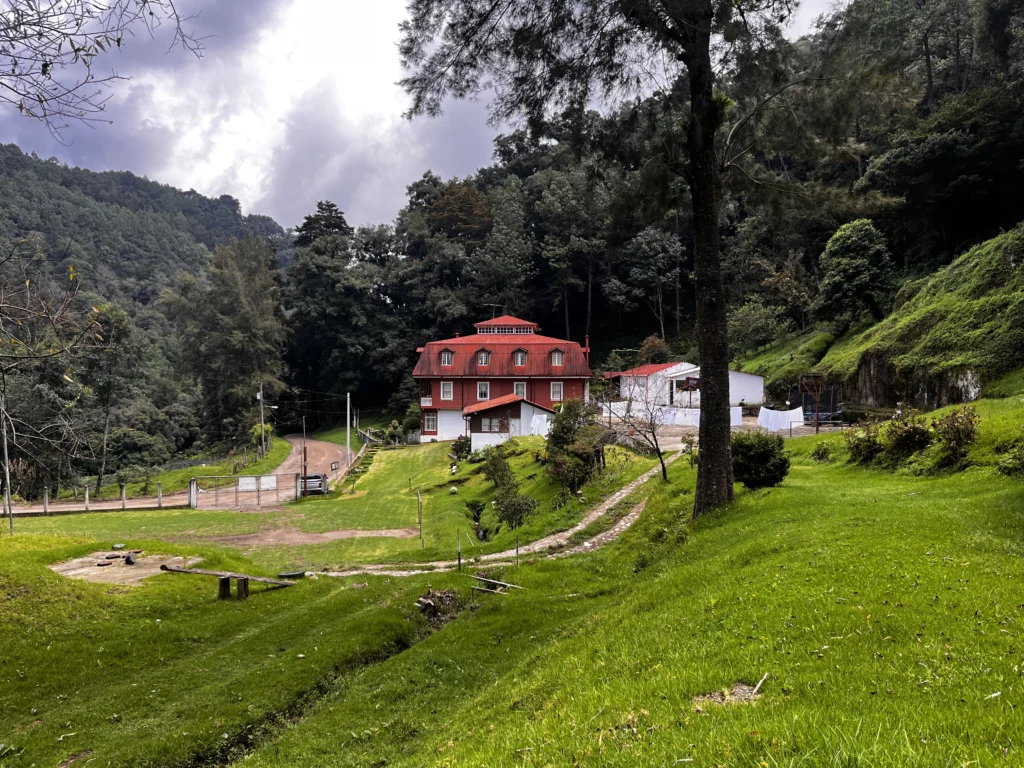
San Cristóbal El Alto and Finca El Tambor: quieter, further up
San Cristóbal El Alto is a small village in the hills above Antigua, with a highland trail away from the usual tourist paths. Lesson’s Motmot, the Gray-crowned Ground-Sparrow, the Mountain Trogon and Rivoli’s Hummingbird live here, and a short walk through the village is part of the morning. There is no fixed entry fee: a donation to the community is appreciated.
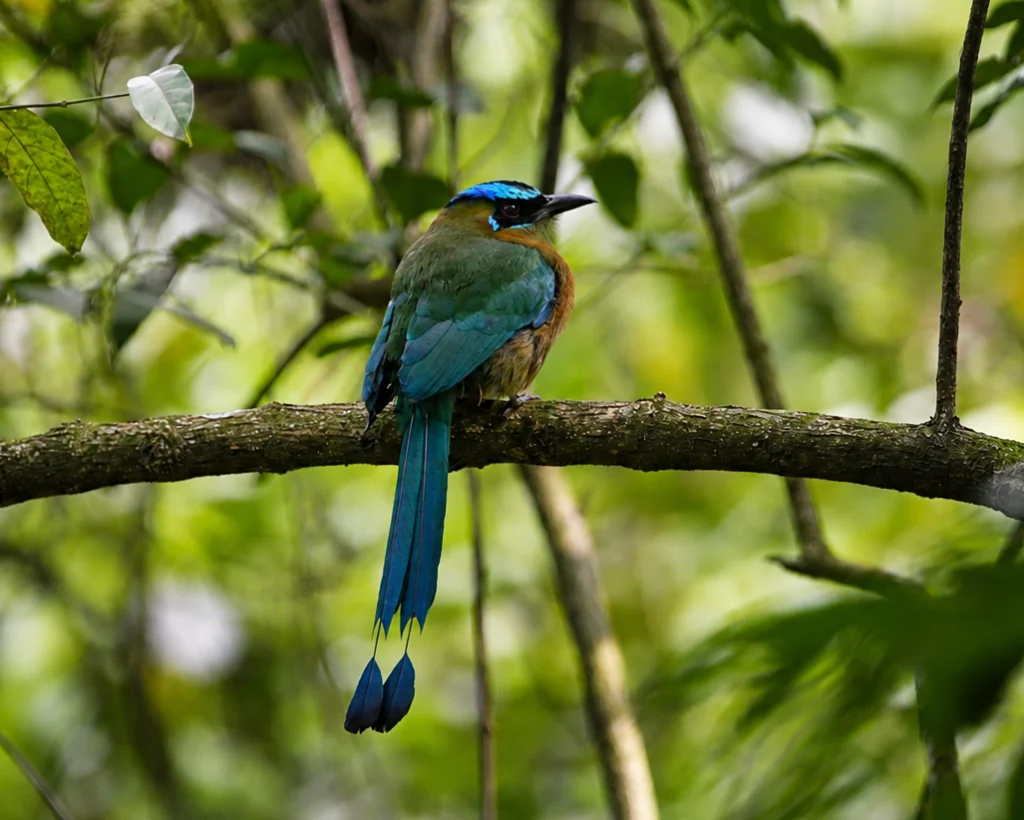
Finca El Tambor is a quiet estate with views of the volcanoes. Among its residents are the Collared Trogon, the Northern Emerald-Toucanet, the Blue-throated Motmot and the small Ferruginous Pygmy-Owl, which hunts by day. Entry is free.
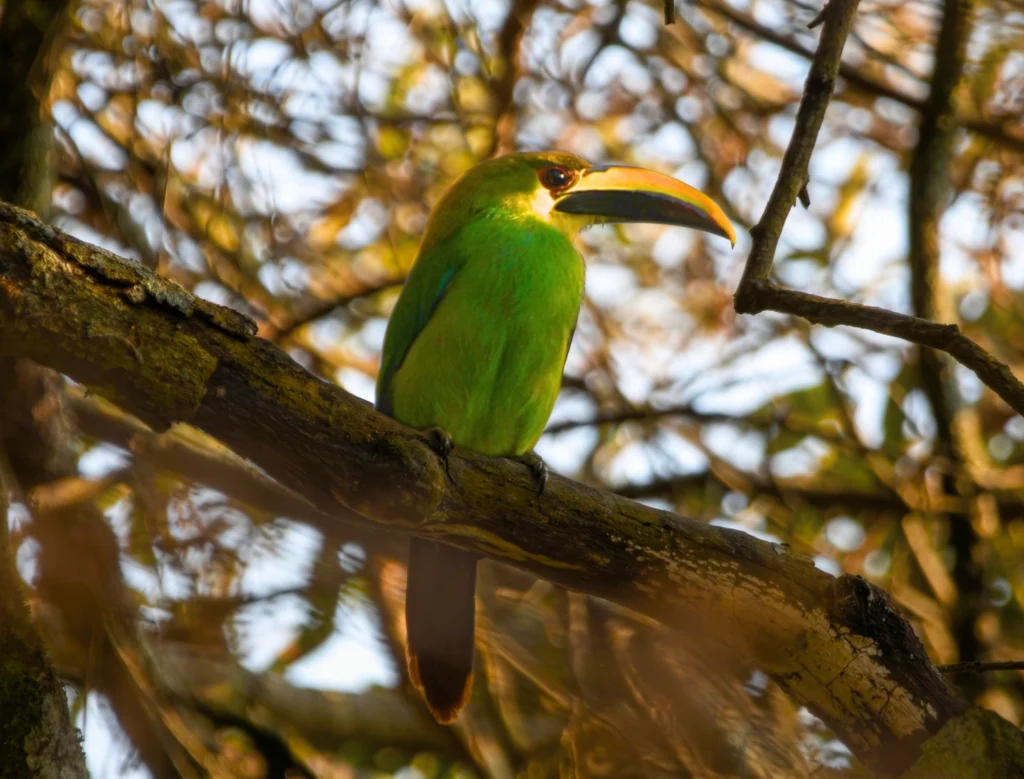
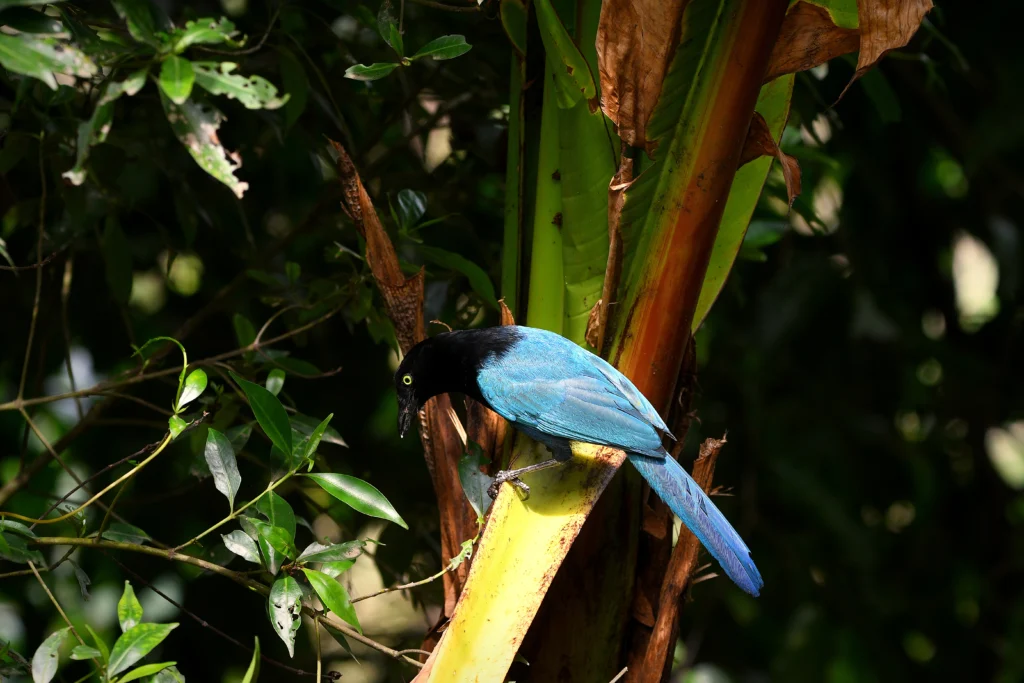
Getting there is the difficult part. Neither is within walking distance, and a tuk-tuk asks about Q300 for the round trip (about $40), a high price for a few kilometres. On our outings to San Cristóbal El Alto and Finca El Tambor, hotel pick-up can be added when you book.
Tecpán: the Pink-headed Warbler
About an hour by car from Antigua, higher and noticeably cooler. The pine-oak forests around Tecpán are one of the places to look for the Pink-headed Warbler, a small warbler with a rose-pink head and breast found only in the highlands of Guatemala and Chiapas, nowhere else in the world. We told its story in a separate entry of this journal. The same forests hold the Garnet-throated Hummingbird, the Mountain Trogon and the Black Thrush, and in winter, Townsend’s Warblers from the north.
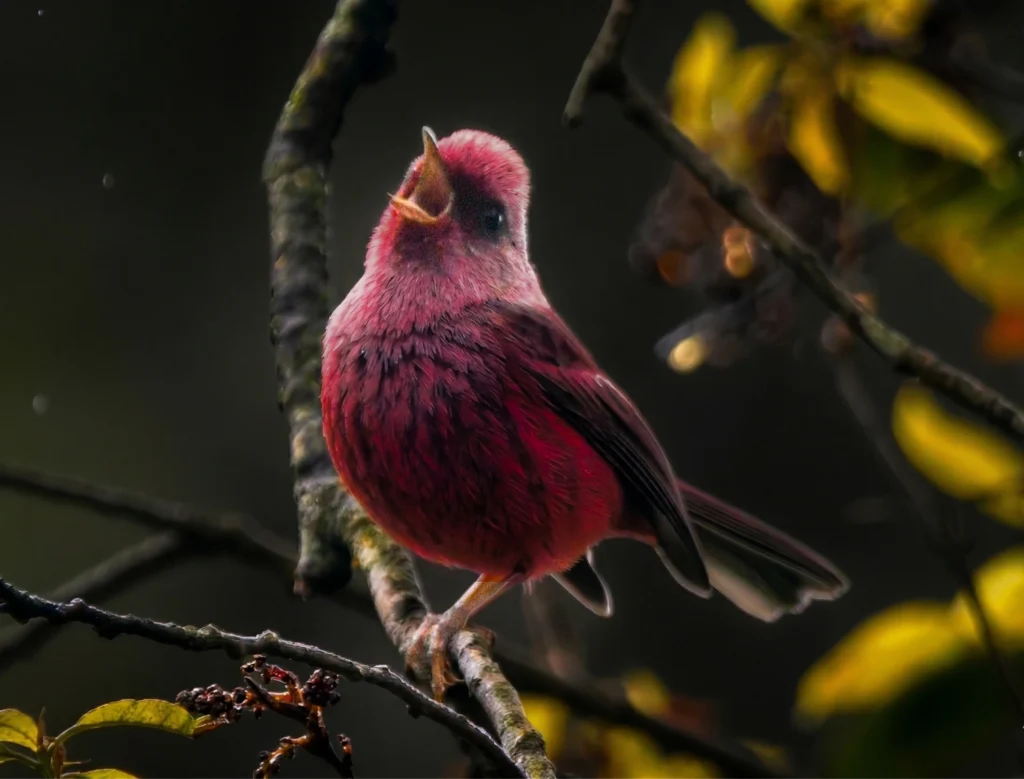
Tecpán is hard to reach by bus or tuk-tuk, and the birds are most active early. We recommend private transport with a guide. Our Tecpán outing starts at 6:00, with the ride from your hotel in Antigua included. Bring a warm layer.
Cerro Alux: on the way to the capital
Between Antigua and Guatemala City, the forest of Cerro Alux is a protected reserve. Entry costs Q20 per person (about $2.60). Along its trails: the Blue-throated Motmot, the Northern Emerald-Toucanet, the Golden-browed Warbler and, with some luck, the Singing Quail, more often heard than seen. In winter, look for the Golden-cheeked Warbler, which nests only in Texas.
The reserve also has quieter corners. At Finca San Rafael de las Hortensias, the trails cost Q10 per person (about $1.30), but the finca can only be reached by private car. Our Finca San Rafael de las Hortensias outing includes the trail fee, and transport from Antigua or Guatemala City can be added when you book. Our El Manzanillo outing walks other trails of the same reserve.
Guatemala City: birds in the morning, a museum after
About an hour from Antigua by road, more with traffic. On the campus of Universidad Francisco Marroquín, the Arboretum is a forest protected since 1980 in the middle of the city. Lesson’s Motmot, the Golden-olive Woodpecker and the Ferruginous Pygmy-Owl live there. A short walk away, on the same campus, the Museo Ixchel del Traje Indígena shows the textiles of Guatemala’s Maya communities: nature in the morning, culture before lunch. Another way to end the day is the historic centre, around the Parque Central.
Our Arboretum and Museo Ixchel outing combines the two. The Jardín Botánico, on Avenida La Reforma, is the other green space we visit in the capital. Opening hours, entry fees and the museums nearby are in our note on birdwatching in Guatemala City.
At a glance
- Cerro de la Cruz: 15 minutes on foot from the centre. Free entry.
- Finca El Pilar: 15 minutes by road. Trails Q65 per person (about $8.50).
- San Cristóbal El Alto: by vehicle, tuk-tuk about Q300 round trip (about $40). No fixed fee, a donation to the community is appreciated.
- Finca El Tambor: by vehicle, tuk-tuk about Q300 round trip (about $40). Free entry.
- Tecpán: about 1 hour by car. Private transport recommended.
- Cerro Alux: between Antigua and the capital. Q20 per person (about $2.60). Finca San Rafael de las Hortensias: Q10 (about $1.30), private car only.
- Guatemala City: about 1 hour by road. Arboretum and Museo Ixchel, or the historic centre.
From October to April, the warblers from the north are here too.
A few practical notes
- Go early. Birds are most active in the first hours of the day: our morning outings start at 7:00 around Antigua, 6:30 in the capital and 6:00 for Tecpán.
- Dress in layers. Mornings are cool, and Tecpán is colder than Antigua.
- Wear closed walking shoes: trails can be damp early in the day.
- On our outings, binoculars are provided, and around Antigua a spotting scope is shared within the group. Bring your own binoculars if you prefer.
- Between October and April, migrants from North America join the resident birds.
All these outings are on our birdwatching page, with their prices.